- info@qvolt.ae
- Mon - Sat : 9am - 6pm

Why planning comes before everything else The UAE is accelerating its transition to electric mobility at a pace that few countries in the region can match. With the government's net-zero commitments, DEWA's clean energy targets, and a rapidly growing fleet of EVs on Dubai's roads, the pressure on businesses and property owners to install EV charging infrastructure has never been higher. Yet the single biggest mistake organisations make is rushing to install chargers without first conducting thorough, expert-led infrastructure planning. A charging station is only as effective as the infrastructure supporting it. Poor site selection, undersized power feeds, incompatible networking protocols, or a failure to secure the necessary regulatory approvals can result in expensive project delays, mandatory retrofits, or installations that simply cannot perform at the required capacity. In the worst cases, organisations have had to decommission stations entirely and start again — at significant financial and reputational cost. This is the problem Qvolt exists to solve. Based near the World Trade Centre on Sheikh Zayed Road, Qvolt brings an engineering-first approach to EV infrastructure planning across the UAE. Their team manages the entire pre-installation process — technical assessment, regulatory navigation, network design, and long-term scalability planning — so that by the time hardware is installed, every decision has already been validated by experts who understand both the technical and compliance landscape in Dubai. EV adoption in the UAE and what it demands of infrastructure The UAE has set ambitious targets for EV adoption as part of its broader sustainability agenda. Dubai's Clean Energy Strategy 2050 and the national Net Zero by 2050 initiative have placed electrification of transport at the centre of the country's environmental roadmap. As a result, EV sales have grown consistently year-on-year, with charging demand expanding well beyond what existing public infrastructure can accommodate. This gap between EV adoption and available charging infrastructure creates a significant opportunity — and an equally significant responsibility — for businesses that operate commercial car parks, residential towers, retail destinations, logistics hubs, and hospitality venues. Tenants and visitors increasingly expect charging as a standard amenity, and employers are under growing pressure to offer workplace charging as part of employee benefit packages. Meeting this demand is not simply a matter of purchasing chargers. The electrical grid infrastructure underpinning any deployment must be engineered to handle the additional load. DEWA and Dubai Municipality have specific regulatory requirements governing how EV charging systems connect to the grid, how they are metered, and how they interact with building electrical systems. Without expert guidance, navigating these requirements is a process that can take months and still result in non-compliant outcomes. Qvolt's four-stage planning process Qvolt's infrastructure planning process is structured to eliminate uncertainty at every stage. Rather than treating planning as a formality before the "real work" of installation begins, the team invests substantial expertise in the pre-installation phase — because the decisions made here determine the performance, compliance, and longevity of the entire system. Stage 1 — Site survey and power assessment. Qvolt engineers conduct a detailed physical survey of the proposed installation site. This includes mapping existing electrical distribution infrastructure, assessing available grid capacity, identifying constraints imposed by the building's main distribution board, and evaluating civil works requirements such as cable routing and trenching. The output is a comprehensive site assessment report that forms the basis for all subsequent design decisions. Stage 2 — DEWA and Dubai Municipality permitting. Qvolt manages the full permitting process, preparing and submitting all required documentation, coordinating with utility representatives, and tracking approvals through to completion. The team's familiarity with the regulatory landscape means applications are submitted correctly the first time, avoiding delays that commonly affect less experienced project teams. Stage 3 — Network architecture and compliance design. Qvolt's engineers design the complete network architecture — covering load calculations, protection coordination, earthing arrangements, and the communications and software layer. Every element is specified to be OCPP 1.6 and 2.0.1 compliant and to support integration with payment platforms, energy management systems, and fleet telematics. The design is explicitly scalable, allowing future charger additions without substantial changes to the underlying infrastructure. Stage 4 — Managed deployment and commissioning. Qvolt oversees the full installation and commissioning process, coordinating civil, electrical, and network contractors. Commissioning includes end-to-end testing, network connectivity validation, and full handover documentation. Clients receive training on the network management platform and a dedicated point of contact for ongoing support.
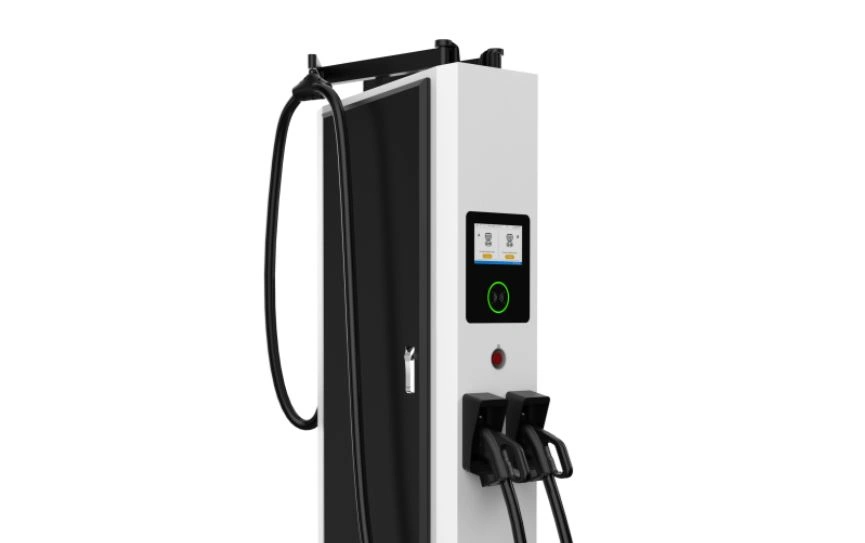
Technical specifications and network capabilities Qvolt plans and deploys EV charging infrastructure across a wide range of output capacities — from 60 kW installations suited to mixed-use commercial sites through to 160 kW high-speed DC fast chargers for destinations where dwell time is short and throughput is critical. This range allows the team to right-size every deployment, avoiding both under-investment that limits usability and over-specification that drives up cost without proportionate benefit. All infrastructure is compliant with the Open Charge Point Protocol (OCPP), specifically versions 1.6 and 2.0.1. OCPP compliance is critical for any operator wishing to integrate their network into broader aggregated platforms, enable roaming agreements, or connect to national charging networks. It also future-proofs the investment by ensuring chargers can communicate with next-generation management software as the market evolves. Every station supports real-time monitoring and remote control functionality, meaning faults can be identified and in many cases resolved without dispatching engineers on-site. The business case for professional infrastructure planning Organisations that attempt to manage EV infrastructure projects without specialist support consistently encounter the same problems: underestimated electrical upgrade costs, permit delays, and charger specifications that cannot scale to meet future demand. Each of these issues is correctable — but correction after installation is dramatically more expensive than getting it right during planning. Qvolt's planning-first methodology directly addresses these risks. A thorough site assessment before any hardware is purchased ensures power capacity, cable routes, and protection systems are all sized correctly for current requirements and anticipated growth. Managing the regulatory process eliminates the most common source of timeline risk. And designing for OCPP compliance and scalability from the outset protects the client's investment against obsolescence. For businesses in competitive real estate segments — hospitality, retail, premium residential, and commercial office — a reliable, professionally managed charging network has also become a meaningful differentiating amenity. EV charging influences tenant decisions, visitor dwell time, and brand perception in ways that are increasingly difficult to ignore. Who Qvolt works with Qvolt's infrastructure planning service accommodates the full spectrum of EV charging use cases. At the smaller end, this includes commercial car parks, boutique hotels, and mixed-use retail developments. At the larger end, the team delivers multi-hundred charger public hubs, airport charging facilities, and dedicated fleet electrification depots where power requirements run into the megawatt range. Fleet operators represent a particularly significant use case. As logistics and delivery companies across the UAE accelerate electrification programmes, the need for high-capacity depot charging has grown sharply. Qvolt's fleet planning process includes detailed load management analysis — ensuring charging schedules are optimised to reduce peak demand charges while guaranteeing all vehicles are ready for dispatch on time. For property developers and real estate investors, early engagement with Qvolt's planning team offers the added benefit of incorporating EV infrastructure into the building design phase — significantly reducing the cost of full deployment once tenants are in occupation. Getting started with Qvolt Qvolt's planning engagements begin with an initial consultation to understand requirements, site characteristics, and timeline. From there, the team conducts the site survey and produces a planning report within an agreed timeframe. For organisations at an earlier stage, Qvolt can also provide feasibility assessments that model expected utilisation, revenue potential, and payback period for different deployment scenarios — giving decision-makers the evidence they need to build a compelling internal business case before any capital is committed. To speak with Qvolt's team, contact them at info@qvolt.ae or call +971 50 373 6442. Their office is located at API World Tower, 27th Floor, Sheikh Zayed Road, Dubai — directly above the Trade Centre Metro Station.

⭐⭐⭐⭐⭐